

Off-the-shelf ERP software offers a range of functionalities that cater to general business needs, but it often falls short when it comes to addressing the unique requirements of specific industries or organizations. These solutions may lack the flexibility, scalability, or key features necessary to optimize workflows and drive growth — leaving businesses constrained by rigid configurations that don’t align with their real processes.
What is ERP?
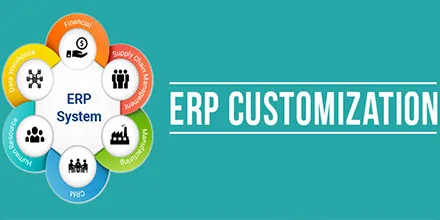
Enterprise Resource Planning (ERP) refers to a suite of integrated applications that facilitate the seamless management of core business processes, including finance, human resources, inventory, supply chain, and customer relationship management. By consolidating data and processes into a unified system, ERP software empowers organizations to streamline operations, enhance collaboration, and gain valuable insights for informed decision-making.
The Promise of Customization
Customized ERP solutions offer a compelling alternative to off-the-shelf software, providing businesses with the flexibility to tailor their ERP systems to suit their precise needs. By working closely with experienced developers and consultants, organizations can design bespoke solutions that align with their workflows, industry regulations, and strategic objectives — from customized modules and workflows to personalized dashboards and reporting tools.
The Case for Customization
Understanding Business Specifics
Every business operates differently, with its own set of processes, workflows, and challenges. Customization allows organizations to fine-tune their ERP systems to accommodate unique requirements, whether it’s managing complex supply chains, integrating specialized modules, or adhering to industry-specific regulations.
Flexibility and Scalability
Customized ERP solutions offer unparalleled flexibility and scalability, enabling businesses to adapt to changing market conditions and scale operations seamlessly — adding new functionalities, accommodating growth, or integrating with third-party systems without constraints imposed by pre-packaged software.
Enhanced User Experience
User adoption is critical for the success of any ERP implementation. By customizing the interface and workflows to match the preferences and workflows of end-users, organizations can enhance user experience, leading to increased productivity, efficiency, and satisfaction across the board.
Advantages of Customized ERP Solutions
- Competitive Advantage: Optimizing processes, improving decision-making capabilities, and fostering innovation to outperform rivals and capture market opportunities more effectively.
- Improved Efficiency and Productivity: Automating repetitive tasks, reducing manual interventions, and providing real-time insights that enable teams to operate more efficiently.
- Better Decision Making: Consolidating data from disparate sources and presenting it in a meaningful way so stakeholders can make informed decisions quickly and confidently.
- Enhanced Customer Satisfaction: Integrating CRM capabilities and customizing communication channels to build stronger relationships and drive customer loyalty.
Cost Considerations: Customization vs. Off-the-Shelf
While off-the-shelf ERP solutions may appear more cost-effective initially, the long-term value of customization often outweighs the upfront savings by reducing costly workarounds, inefficiencies, and missed opportunities down the line. When evaluating total cost of ownership (TCO), customization can lead to lower TCO over the system’s lifecycle by minimizing integration effort, reducing dependency on external vendors, and maximizing system efficiency — while offering greater scalability as the business grows.
Implementing Customized ERP Solutions
The journey towards a customized ERP solution begins with a comprehensive needs assessment: identifying pain points, inefficiencies, and opportunities for improvement, and defining clear objectives and success criteria while engaging stakeholders from across the business. From there, choosing the right development partner is critical — look for a proven track record delivering tailored solutions within your industry, and a collaborative partnership built on trust and clear communication.
During development and configuration, close attention to usability, performance, and scalability ensures the final solution meets both current requirements and future growth objectives, backed by rigorous testing before go-live. Comprehensive training programs and ongoing support then help employees adopt the new system effectively, minimizing resistance and maximizing the return on your ERP investment.
Overcoming Challenges
Customization efforts can face resource constraints, added complexity, technical limitations, resistance to change, diverse customer expectations, and regulatory compliance requirements. Mitigating these risks starts with thorough planning — setting clear objectives, defining scope, and establishing realistic timelines and budgets — paired with investment in the right technology infrastructure and an iterative, agile approach that allows continuous refinement based on feedback.
Future Trends and Innovations
AI and Machine Learning in Customized ERP
AI and Machine Learning are revolutionizing ERP systems, enabling them to evolve from static data repositories to dynamic, intelligent platforms that adapt and learn from user interactions — automatically adjusting workflows, configurations, and recommendations based on evolving business needs, from predicting demand to detecting anomalies in financial transactions.
Cloud-Based ERP Systems
Cloud-based ERP solutions offer unparalleled flexibility, scalability, and accessibility on a subscription-based model, eliminating the need for costly hardware procurement while facilitating seamless collaboration across geographically dispersed teams and built-in disaster recovery for business continuity.
Integration with IoT and Industry 4.0
By integrating IoT devices and sensors with ERP platforms, organizations can collect real-time data from the physical world — monitoring equipment performance, production efficiency, and quality control on the factory floor — while digital twins and augmented reality enable simulation, analysis, and optimization of processes in a virtual environment before they happen on the shop floor.
As businesses navigate an increasingly complex and competitive landscape, customized ERP solutions offer the flexibility, scalability, and efficiency needed to thrive in the digital age. By understanding the unique requirements of their operations and partnering with an experienced ERP provider, businesses can unlock new levels of productivity, innovation, and growth.